The Technical Audit: Why Vaibhav Sooryavanshi’s Bat-Swing Faces a Structural Test in Manchester
A Rajasthan Royals teammate casts doubt on Vaibhav Sooryavanshi's style ahead of the Manchester T20I. Inside the technical analysis of his bat-swing.
Loading...

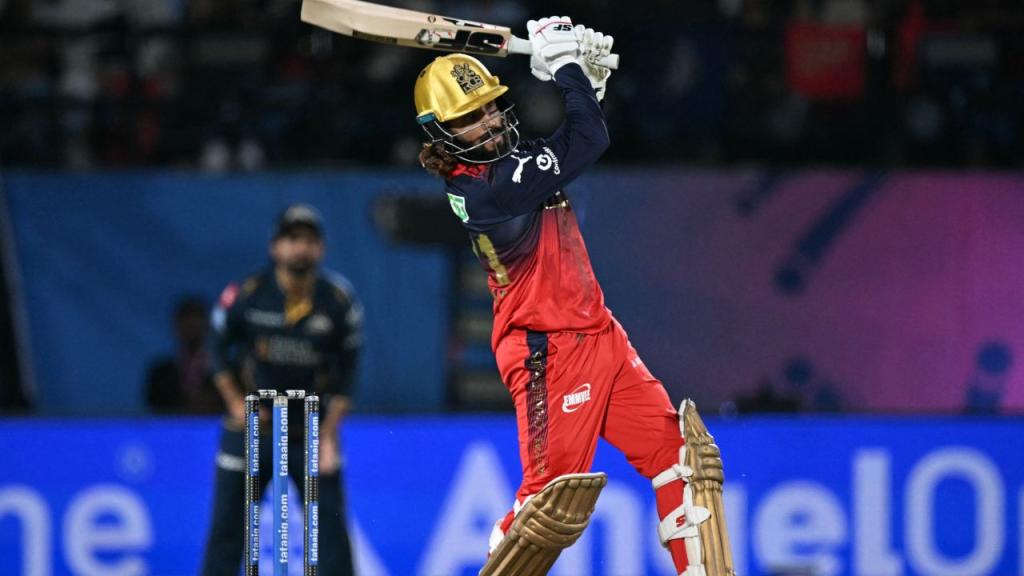
RCB Captain Rajat Patidar breaks the marathon IPL playoff records by playing an incredibly 33-ball score against GT. An examination of his trigger mechanics at Dharamshala.
I sat on the boundary at the edge of Himachal Pradesh Cricket Association Stadium in Dharamshala the night before, and watched the misty mountain air drift across the floodlights, just after the 19th over in the opening innings ended. The temperature was frigid however the pitch was burned. I witnessed Kagiso Rabada return to his bowling line, amidst a void of any tactical advice, following Rajat Patidar delivered a spectacular back-foot attack that defied high-altitude gravity of the field. In a high-risk Qualifier 1 game where captains typically tend to retreat into their shells of caution however, this Royal Challengers Bengaluru skipper was a complete opposite. In launching a staggering of 93 runs in just 33 balls Patidar did more than take his team to an historical 254/5--the the highest total for a team ever recorded in IPL playoff history, he also established the model of leadership for his team that set new records for marathon tournaments.
Table of contents [Show]
To comprehend the mathematic ridiculousness of the Patidar's 281.82 Strike Rate during a game in playoffs You must study the biomechanical changes he made prior to his IPL 2026 cycle. With 1 457 meters in altitude The thin air diminishes aerodynamic drag that the ball experiences so that aerial strikes are able to travel much farther. The real problem of Dharamshala is in the condensed clay surface. It works with the ball to cause high friction in the soil with evening moist.
If Mohammed Siraj and Kagiso Rabada are hitting an hard-length ball, it often "grabs" the deck, producing a trajectory with two speeds which causes cutting edges. Patidar has reacted to this by using an engineered trigger move.
In the past, Patidar played an over-exaggerated back-and-across move that secured his front hip and made his vulnerable to ball sliding back within the Corridor of Uncertainty. In 2026, Patidar switched to a minimal neutral base trigger. In keeping the weight of his body evenly distributed over the soles of his foot, he was able to delay his dedication to the shot until after the ball had reached the surface.
As Rashid Khan attempted to force his faster skidders through, Patidar wasn't reaching to the ball using his strong hands. The ball was allowed to be in his direct line of sight. using a quick, brisk backlift to propel his ball into the straight lines.
In contrast to the speedy heavy-ball strategies employed by the pace unit He employed an cross-seam cancellation method, moving his front foot slightly in order in order to allow an unhindered motion through an "V." This mechanical method of discipline allowed him to take on 33 deliveries of high intensity with only one dot ball during his time.
Gujarat Titans won the toss and chose to bowl taking advantage of their historic middle-over spin squeeze, which has been known to impede the RCB's pace. The first ten runs the plan seemed logical. Rashid Khan and Jason Holder restricted the scoring by taking important wickets, and forcing RCB to a short mid-innings shake.
And then, Patidar started his blueprint for power play exploitation in violation of the field's standard restrictions.
the Lifeline Acceleration After having survived two missed opportunities due to mistiming fast strokes, Patidar chose to not resign to a defensive anchor position. He used the reprieves as an opportunity to speed up the bat's swing.
The Boundary Siege: Patidar hit his 50th century in only 21 overs making it the fastest fifty in a playoff match for the RCB captain. He concentrated on the 14th and 15th overs. turning good-length ball into maxima by slapping bowlers who failed to execute their plan by a few inches.
"The Death-Over" Carnage Together with Krunal Pandya with to a fluent 43, Patidar orchestrated an unprecedented attack that squandered an astonishing 114 runs in the last six overs.
This was not reckless swinging. It was calculated and targeted of the smaller square boundary. After recognizing the GT pacers' inability to discover the block-hole under pressure, Patidar would stand within his crease, deep enough to transform possible yorkers into low full-tosses. This completely destroyed Gujarat's deathbowling structures.
The stats that is Match 68 outlines how Patidar's individual performances completely surpassed rigorous metrics used by GT's best bowling players.
| Player / Matchup | Role / Position | 2026 Playoff Metric | Tactical Result |
|---|---|---|---|
| Rajat Patidar | RCB Captain (No. 4) | 93 Runs (33 Balls, 9 Sixes)* | Recorded 281.82 Strike Rate |
| Kagiso Rabada | GT Lead Pacer | 1/48 in 4 Overs | Punished on Hard-length |
| Virat Kohli | RCB Opener | 43 Runs (31 Balls) | Provided Early Powerplay Foundation |
| Rashid Khan | GT Spinner | 1/34 in 4 Overs | Target of Tactically Restrained Singles |
It's not a little bit of luck, it's actually a fundamental shift in the way T20 knockout matches should be viewed. Rajat Patidar has proven that the conventional "anchor-to-the-end" captaincy philosophy is outdated in today's franchise cricket. In keeping a high-risk and reward-for-risk strategy even when the team was stricken with quick wickets and he pushed his team Gujarat Titans into an emergency mode before the beginning of the second innings.
The comprehensive victory means RCB is now heading straight to the IPL 2026 Final in Ahmedabad as huge favorites. Patidar's transition from a traditional domestic player to an enthralling strategic enforcer has been completed. Look for his simple trigger motion and the aggressive middle-over selection to determine the manner of play in the final, as currently, bowling to the RCB captain within the uncertain Corridor is the most risky task in the game.

A Rajasthan Royals teammate casts doubt on Vaibhav Sooryavanshi's style ahead of the Manchester T20I. Inside the technical analysis of his bat-swing.
Finland faces Portugal in the 1st T20I of the 2026 series at Kerava. Technical analysis of pitch friction, team squads, and expert match predictions.
Inside the VAR chaos: Learn how cricket's Snicko technology tracked a micro-touch to save Cristiano Ronaldo and Portugal at the 2026 World Cup.