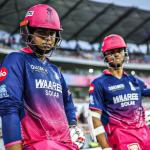
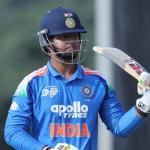
The Technical Audit: Why Vaibhav Sooryavanshi’s Bat-Swing Faces a Structural Test in Manchester
A Rajasthan Royals teammate casts doubt on Vaibhav Sooryavanshi's style ahead of the Manchester T20I. Inside the technical analysis of his bat-swing.
Loading...


What made India leave during the 1950 World Cup? The reason wasn't because of being in naked. An analysis of the technical aspects behind the withdrawal of the AIFF in 1950 and the true story of why it happened.
I was on the edge on the sidelines of Salt Lake Stadium during the 2026 Intercontinental Cup qualifiers last month and watched the current Indian team train in cutting-edge carbon-fiber boots. The discussion among the experienced scouts shifted like it does often towards what is often referred to as the "Greatest What-If" of Indian sports: 1950's FIFA World Cup in Brazil. One particular incident during the 19th Over of a high-pressure IPL game where a player slipped and fell off a shoe only to run--caused a viral revival of the mythical legend. It is believed that India did not get its World Cup spot because FIFA had banned the use of barefoot in matches. Surrounded by the infrastructure driven by data in 2026, the reality of the 1950 decision requires an even sharper and more forensic reasoning.
Table of contents [Show]
The"barefoot" narrative is popular myth that overlooks how technology changed the game after the war period. At 1948's London Olympics, India did actually compete in barefoot competition against France winning 2-1 and receiving worldwide respect in regard to their control of the ball. But, the choice to not participate in Brazil 1950 did not have anything to do with be related to footwear restrictions.
As of 1950, FIFA had already standardized equipment used for"the "World's Championship." While Indian players possessed elite tactical triggers--specifically a low center of gravity that allowed for rapid changes in direction on dry, subcontinent soil--the lush, rain-slicked pitches of Brazil presented a different mechanical challenge. Walking barefoot on a hard damp surface results in the decrease in "purchase" or grip. If FIFA would have allowed it the long, hard sprints that are required for the 90 minutes of a World Cup match would have be physically impossible without grip provided by studs.
The AIFF (All India Football Federation) in the early days viewed as the Olympics as the ultimate level in sporting excellence. In the past, the World Cup was seen as an event for professional athletes of little significance. Technically, the Federation was unwilling to invest the Strike Rotation of financial resources--essentially the travel costs and the six-week ship voyage to South America--for a tournament they did not yet respect as the premier global event.
The withdrawl was a error in long-term planning. India was put in the group 3 together with Sweden, Italy, and Paraguay. In light of other cancellations, India could have reached the final stage with only a few winnings.
Financial Mismanagement The AIFF said they couldn't be able to afford travel expenses despite FIFA providing some of the costs.
Selection Logic It was worried with the team's inability to training for matches lasting 90 minutes (Indian home games were 70 minutes in the mid-sixties). They were worried that losing in the international arena could harm India's "Brand India" established at the 1948 Olympics.
The Pro-Am Divide: India was keen to keep their status as an amateur team to participate in the Olympics. Participating in the professional World Cup was seen as the risk of losing that status.
This table compares 1950 football team's technical restrictions to the present 2026 footballing conditions in India.
| Metric | 1950 National Team | 2026 National Team |
|---|---|---|
| Primary Footwear | Barefoot / Surgical Tape | Carbon-Fiber Studs |
| Match Duration | 70 Minutes (Standard) | 90+ Minutes (Elite) |
| Primary Tactical Focus | Close-Control Dribbling | High-Press / Transition Speed |
| World Cup Status | Withdrew (Qualified) | Chasing Qualification |
| Financial Support | Minimal / Crowdfunded | Multi-Billion Rupee Ecosystem |
It wasn't a ban on footwear but a technical or administrative renunciation. This "barefoot story" served as an excuse to justify the AIFF management that was unable to comprehend the changing world of sport in the world. Prioritizing the 70-minute Olympic style over the 90 minute World Cup, India missed its chance to solidify its position as a soccer superpower.
Looking ahead to the next cycle in 2030 The lesson from 1950 is clear: any tactical lapse off the field can be more destructive than any limitation in technology on it. India did not lose its place due to shoes, it ended up losing it due to failure to be ambitious.

A Rajasthan Royals teammate casts doubt on Vaibhav Sooryavanshi's style ahead of the Manchester T20I. Inside the technical analysis of his bat-swing.
Finland faces Portugal in the 1st T20I of the 2026 series at Kerava. Technical analysis of pitch friction, team squads, and expert match predictions.
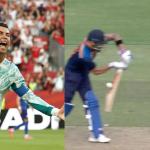
Inside the VAR chaos: Learn how cricket's Snicko technology tracked a micro-touch to save Cristiano Ronaldo and Portugal at the 2026 World Cup.