The Technical Audit: Why Vaibhav Sooryavanshi’s Bat-Swing Faces a Structural Test in Manchester
A Rajasthan Royals teammate casts doubt on Vaibhav Sooryavanshi's style ahead of the Manchester T20I. Inside the technical analysis of his bat-swing.
Loading...

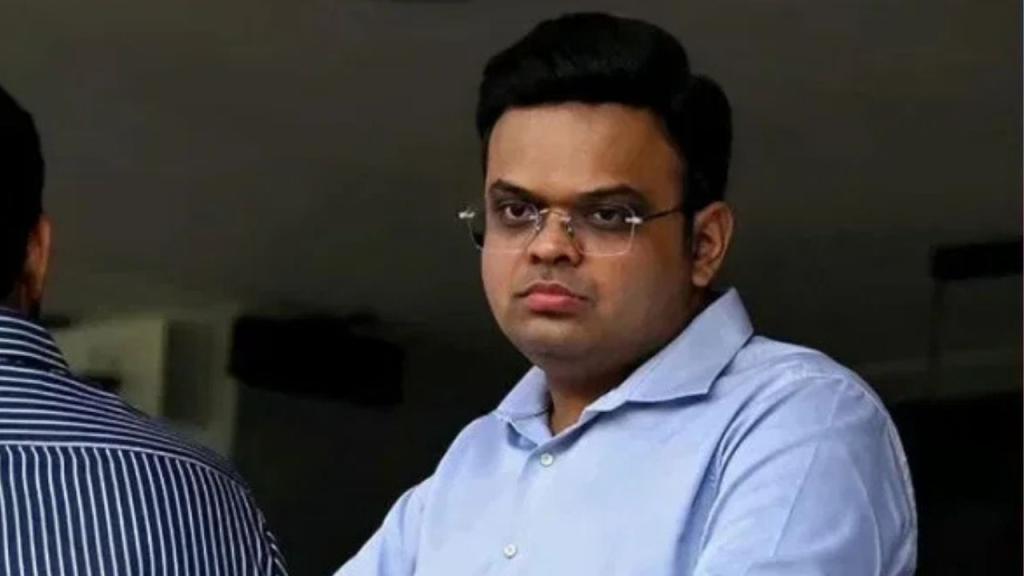
The BCCI called out for ICC’s favouritism as global cricket boards raise voices over scheduling, venue bias, and financial disparity in major tournaments.
The debate surrounding the financial and administrative stronghold of cricket has reached a boiling point, and the BCCI called out for ICC’s favouritism has once again become the central talking point in the sports world. I have been following these administrative shifts for a long time, and you can see that the line between a democratic global sport and a monopolized business is thinner than ever. As we know, global cricket tournaments are designed to showcase the best talent from around the world, but recent scheduling, venue selections, and financial distributions have led several international boards to voice their concerns openly.
I believe this friction is not just a temporary dispute but a sign of a deeper structural imbalance within international cricket. When you look at how major tournaments are structured, you can see a recurring pattern where the scheduling seems to tailor-fit prime-time television slots in the Indian subcontinent, regardless of where the tournament is actually being held. As we know, this directly maximizes broadcast revenues, but it leaves other nations feeling like secondary participants in what should be an equal playing field.
To understand why the BCCI called out for ICC’s favouritism is such a massive issue today, we must look at the financial model of the ICC. I think it is crucial to analyze the revenue distribution model, where a major chunk of the global earnings goes directly to a single nation. You can see that this financial dominance translates to administrative leverage, leaving smaller nations struggling to sustain their domestic structures.
Financial Disparity: Under the current revenue-sharing model, the BCCI takes home the largest share of the ICC surplus, leaving other boards with fractionally smaller budgets.
Scheduling Bias: High-profile matches, particularly those involving the Indian team, are consistently scheduled for weekends and prime broadcast times, which critics argue compromises sporting integrity.
Venue Security: Major knockout matches are often pre-allocated to specific venues based on commercial projections, reducing the organic excitement of the tournament progression.
I have compiled a comparative overview of how financial muscle dictates administrative decisions in global cricket. As we know, numbers do not lie, and you can see a clear picture of why lesser-funded cricket boards are feeling marginalized in this setup.
| Parameter | Indian Cricket Board (BCCI) | Associate & Other Full Members |
|---|---|---|
| Primary Revenue Source | Broadcast rights, domestic leagues, global sponsorships | ICC funding grants, limited bilateral series |
| Scheduling Influence | High (Dictates prime-time television slots globally) | Low (Must adapt to pre-determined schedules) |
| Financial Share | Over 38% of the total ICC revenue pool | Shared among remaining member nations |
I believe that this disparity is forcing other cricket boards to make tough choices. As we know, boards like those of South Africa, the West Indies, and New Zealand have struggled to retain their premier talent because domestic leagues elsewhere offer far better financial security than national contracts. You can see that this is a direct consequence of a top-heavy global economy where the richest board continues to accumulate wealth while others are left to survive on crumbs.
This is not just about off-field money; you can see the direct impact of these decisions on the field as well. I think the pre-seeding of teams for major tournaments, designed to guarantee high-profile clashes later in the tournament, takes away the fair competition aspect that makes sports so captivating. As we know, when a tournament structure is tweaked to ensure specific match-ups happen for financial reasons, the pure competitive spirit of the game takes a backseat.
In my professional view, the international cricket ecosystem needs a major reality check. If the BCCI continues to dominate every single facet of the ICC decision-making process, we risk turning a global sport into a single-market commodity. You can see that for the game to grow in regions like North America and Europe, the distribution of power and resources must become more democratic. Until that happens, the criticisms of favoritism will only grow louder, and the credibility of global tournament structures will continue to be questioned by fans and analysts alike.

A Rajasthan Royals teammate casts doubt on Vaibhav Sooryavanshi's style ahead of the Manchester T20I. Inside the technical analysis of his bat-swing.
Finland faces Portugal in the 1st T20I of the 2026 series at Kerava. Technical analysis of pitch friction, team squads, and expert match predictions.
Inside the VAR chaos: Learn how cricket's Snicko technology tracked a micro-touch to save Cristiano Ronaldo and Portugal at the 2026 World Cup.